The TED lecture by Jill Bolte Taylor explores the insights she, as a brain researcher, gained when she experienced a stroke. We may already know about the differing functions of the right and left hemispheres (Right being in the moment, present, kinesthetic, visual, and energy; Left connecting past and future, linerar, methodical, able to differentiate the I AM from the energy). Jill takes us a step further to connect to what many Christians name G*d.
Thursday, January 20, 2011

Tuesday, January 4, 2011
Five Minds for the Future
Posted October 26th, 2010
In a time of relentless change, there’s only one thing that’s certain: the face-paced future will demand that we function and communicate in more complex ways. Howard Gardner, known for his Frames of Mind: The Theory of Multiple Intelligences (2004: Basic Books), has taken his research a step forward saying that we will each need to master “five minds” in order to excel in our ever increasingly complex world. Some of his initiatives are being lived out in The GoodWork Project.
His summary of Five Minds for the Future (2008: Harvard Business Press): In the future, individuals who wish to thrive will need to be experts in at least one area – they will need a discipline. As synthesizers, they will need to be able to gather together information from disparate sources and put it together in ways that work for themselves and can be communicated to other persons.
Because almost anything that can be formulated as rules will be done well by computers, rewards will go to creators – those who have constructed a box but can think outside it.
The world of today and tomorrow is becoming increasingly diverse, and there is no way to cordon oneself off from this diversity. Accordingly, we must respect those who differ from us as well as those whom we have similarities.
Finally, as workers and as citizens, we need to be able to act ethically – to think beyond our own self-interest and to do what is right under the circumstances.
What are the “Five Minds”?
He believes, “The transformational leader creates a compelling narrative about the missions of her organization or polity; embodies that narrative in her own life; and is able, through persuasion and personal example, to change thoughts, feelings, and behaviors of those whom she seeks to lead.”
In terms of educational leadership in the church, how might his new theories inform our work?
How can the Church be ready to face the future of our rapidly changing world?
In a time of relentless change, there’s only one thing that’s certain: the face-paced future will demand that we function and communicate in more complex ways. Howard Gardner, known for his Frames of Mind: The Theory of Multiple Intelligences (2004: Basic Books), has taken his research a step forward saying that we will each need to master “five minds” in order to excel in our ever increasingly complex world. Some of his initiatives are being lived out in The GoodWork Project.
His summary of Five Minds for the Future (2008: Harvard Business Press): In the future, individuals who wish to thrive will need to be experts in at least one area – they will need a discipline. As synthesizers, they will need to be able to gather together information from disparate sources and put it together in ways that work for themselves and can be communicated to other persons.
Because almost anything that can be formulated as rules will be done well by computers, rewards will go to creators – those who have constructed a box but can think outside it.
The world of today and tomorrow is becoming increasingly diverse, and there is no way to cordon oneself off from this diversity. Accordingly, we must respect those who differ from us as well as those whom we have similarities.
Finally, as workers and as citizens, we need to be able to act ethically – to think beyond our own self-interest and to do what is right under the circumstances.
What are the “Five Minds”?
- The Disciplined Mind is a distinctive mode of cognition that characterizes a specific scholarly discipline, craft, or profession.
- The Synthesizing Mind take information from disparate sources, understands and evaluates that information objectively and puts it together to build a new capacity to understand new information.
- The Creating Mind breaks new ground by putting forth new ideas, poses unfamiliar questions, and conjures up fresh ways of thinking.
- The Respectful Mind notes and welcomes differences between human individuals and human groups and seeks to work effectively with them.
- The Ethical Mind ponders the nature of one’s work and the needs and desires of the society in which one lives.
He believes, “The transformational leader creates a compelling narrative about the missions of her organization or polity; embodies that narrative in her own life; and is able, through persuasion and personal example, to change thoughts, feelings, and behaviors of those whom she seeks to lead.”
In terms of educational leadership in the church, how might his new theories inform our work?
How can the Church be ready to face the future of our rapidly changing world?
A Study in Perceptions
As this video illustrates, our perception of reality is often colored by preconceptions and prejudices. It is important to recognize that our contexts shape our experiences of and in the world. This, in turn, informs our assumptions and leads to conclusions that may be wrong. The challenge is for us to find ways to approach new experiences and information from a stance of openness. Consider how our interactions would change if we engaged others with an appreciation for the differences our contexts create.
Monday, December 20, 2010
Jesus' Words Rock: The Red Letter Project
Christianity Today Reviews TRLP
Jul. 07 - 2010
Style:A plethora of rock genres; compare to Stone Temple Pilots, Casting Crowns
Top tracks:"Sacrifice," "70x7," "You Must Love"
Overtaking the New Testament with pure rock, The Red Letters Project have constructed a wide-ranging, 40-song, 3-disc collection featuring every word spoken by Jesus in the Gospel of Matthew (as presented in the New Living Translation). Not an easy task, especially considering the heady objective of musically appropriating verses by the Son of God.
Lest one dismiss it as a mere publicity move, the creators' sincere desire is apparently to see Scripture made famous—or at least better known for those who might otherwise ignore its life-changing inspiration. The project uses every influence of rock imaginable to dynamically impress the Bible's truths in the hearts of listeners.
With the rock opera flair of�Jesus Christ Superstar, albeit more modern, the�Red Letters�set list ebbs and flows between hard-hitting anthems (a la Aerosmith), energetic post-grunge (Foo Fighters, Creed), and acoustic-driven pop/rock (MercyMe).
"70x7" conjures up the infectious vocal hooks of southern outfits like DecembeRadio and The Black Crowes, wailing Jesus' command to issue forgiveness generously (Matthew 18:21-23), and "Cornerstones" continues the trend with a Lynyrd Skynyrd-ish acoustic/electric hybrid. "Oh Jerusalem" supports a top-notch choir of raw southern ardor, belting:�"Blessings on the one who comes in the name of the Lord!"�(Matt. 21).
"Fish for People" lyrically portrays Christ's temptation (Matt. 4:1-11), the calling of the first disciples (Matt. 4:18-22), and The Beatitudes (Matt. 5:3-10), and contends musically with Casting Crowns straightforward rock/pop—an easy appeal for Christian music fans who enjoy the platinum band's Scripture-based radio fare. Meanwhile, "I Was Hungry" musically imitates Steven Curtis Chapman's lighter fare a la�Speechless.
"You Must Love" is akin to Audio Adrenaline's "Hands and Feet" days, with the lead vocal uncannily resembling Mark Stuart's raspy inflections. "Sacrifice" mixes up the cutting-edge riffs of Skillet with tobyMac's rap and rhythm tracks.
Red Letters�is certainly done professionally, but the recitative nature of cramming historic, and sometimes-antiquated, language into songs is hard to leisurely digest. Will the intended audience of teens, young adults, and music fans find it relevant? Hard to say. But whether the project reaches one or one million, good things will happen. According to some black letters of the Bible—those spoken by the Father, not the Son—putting God's Word out there "always produces fruit. It will accomplish all I want it to, and it will prosper everywhere I send it" (Isa. 55:11).
Jul. 07 - 2010
Style:A plethora of rock genres; compare to Stone Temple Pilots, Casting Crowns
Top tracks:"Sacrifice," "70x7," "You Must Love"
Overtaking the New Testament with pure rock, The Red Letters Project have constructed a wide-ranging, 40-song, 3-disc collection featuring every word spoken by Jesus in the Gospel of Matthew (as presented in the New Living Translation). Not an easy task, especially considering the heady objective of musically appropriating verses by the Son of God.
Lest one dismiss it as a mere publicity move, the creators' sincere desire is apparently to see Scripture made famous—or at least better known for those who might otherwise ignore its life-changing inspiration. The project uses every influence of rock imaginable to dynamically impress the Bible's truths in the hearts of listeners.
With the rock opera flair of�Jesus Christ Superstar, albeit more modern, the�Red Letters�set list ebbs and flows between hard-hitting anthems (a la Aerosmith), energetic post-grunge (Foo Fighters, Creed), and acoustic-driven pop/rock (MercyMe).
"70x7" conjures up the infectious vocal hooks of southern outfits like DecembeRadio and The Black Crowes, wailing Jesus' command to issue forgiveness generously (Matthew 18:21-23), and "Cornerstones" continues the trend with a Lynyrd Skynyrd-ish acoustic/electric hybrid. "Oh Jerusalem" supports a top-notch choir of raw southern ardor, belting:�"Blessings on the one who comes in the name of the Lord!"�(Matt. 21).
"Fish for People" lyrically portrays Christ's temptation (Matt. 4:1-11), the calling of the first disciples (Matt. 4:18-22), and The Beatitudes (Matt. 5:3-10), and contends musically with Casting Crowns straightforward rock/pop—an easy appeal for Christian music fans who enjoy the platinum band's Scripture-based radio fare. Meanwhile, "I Was Hungry" musically imitates Steven Curtis Chapman's lighter fare a la�Speechless.
"You Must Love" is akin to Audio Adrenaline's "Hands and Feet" days, with the lead vocal uncannily resembling Mark Stuart's raspy inflections. "Sacrifice" mixes up the cutting-edge riffs of Skillet with tobyMac's rap and rhythm tracks.
Red Letters�is certainly done professionally, but the recitative nature of cramming historic, and sometimes-antiquated, language into songs is hard to leisurely digest. Will the intended audience of teens, young adults, and music fans find it relevant? Hard to say. But whether the project reaches one or one million, good things will happen. According to some black letters of the Bible—those spoken by the Father, not the Son—putting God's Word out there "always produces fruit. It will accomplish all I want it to, and it will prosper everywhere I send it" (Isa. 55:11).
Hip Hop Bible
The Christ Transforming Culture vs the Christ Against Culture debate has found a new battlefield.... a Hip Hop Bible.
Wednesday, October 27, 2010
Tuesday, October 19, 2010
CHanging Educational Paradigms
This creative animation by Sir Ken Robinson provides a helpful analysis of the current educational paradigm operative in the majority of American educational settings. It parallel's Michael Schiro's analysis of Curricular ideologies, notably Schiro's "Scholar Academic" paradigm.
Friday, October 8, 2010
Thursday, October 7, 2010
Faith and Pop Culture

I'm always interested in how faith and pop culture interact.... here is an interesting commentary about the most recent episode of GLEE
Thursday, September 16, 2010
Friday, August 20, 2010
Saturday, March 27, 2010
Findithere.com
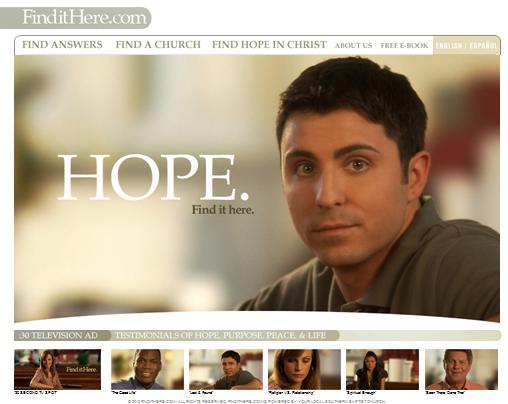
There was an add for "findithere.com" repeatedly played during NECN broadcasts on this (Saturday) morning. Curious, I followed the link, which leads to a variety of other layers about Scripture and the reasons to believe in Jesus Christ. It is a slick, video-story filled, website with heart-touching welcomes to have a personal relationship with Jesus... who will take care of all our needs.
* A young man who lived large and was the life of the party... until he lost his job....
* A Hispanic middle-aged woman who, when sh lost her husband, could not find solice in rituals, but did through a newfound sense of relationship with Jesus through friends from a new church.
It includes tabs to "Find Answers,: "Find a Church," "Find Hope in Christ" and a downloadable eBook. "About Us" reveals that "Find It Here is a ministry of thousands of churches across north America working as part of the Southern Baptist Convention." The copyright says the site is "powered by your local Southern Baptist Church."
Thursday, March 4, 2010
Tuesday, February 23, 2010
RETHINK CHURCH
The United Methodist Church has initiated a campaign to "rethink church". Their website describes it as "a new welcoming campaign that will raise awareness of The United Methodist Church by posing the rhetorical question, 'What if church were a verb?' It is an evolution of the denomination’s 'Open hearts' advertising and welcoming ministry."
Go to the "Rethink Church 101" website to learn more about its purpose and process.
Monday, February 22, 2010
Thursday, January 21, 2010
Tuesday, January 5, 2010
Wednesday, December 16, 2009
The wonderful world of WIKIs
According to Wikipedia, the free wiki encyclopedia, "A wiki (pronounced /ˈwɪki/ WIK-ee) is a website that allows the easy creation and editing of any number of interlinked web pages via a web browser using a simplified markup language or a WYSIWYG text editor. Wikis are typically powered by wiki software and are often used to create collaborative websites, to power community websites, for personal note taking, in corporate intranets, and in knowledge management systems.
Most wikis serve a specific purpose, and off topic material is promptly removed by the user community. Such is the case of the collaborative encyclopedia Wikipedia. In contrast, open purpose wikis accept all sorts of content without rigid rules as to how the content should be organized.
Ward Cunningham, the developer of the first wiki software, WikiWikiWeb, originally described it as "the simplest online database that could possibly work." "Wiki" (pronounced [ˈwiki] or [ˈviki]) is a Hawaiian word for "fast". "Wiki" has been backronymed by some to "What I Know Is"."
Perhaps one of the best features of the wiki is that it goes a long way toward solving the age-old group project problem! How many times have you been told that one person did all of the work on a project, or that another person did not contribute. If the work is done in a wiki, every single change is documented in the "history" view. You can tell who contributed what - who made what changes and when. Wikis also allow for collaborations across institutions, permitting students from different classes to work together on projects.
Comparison of Wiki Software from Wikipedia.
RELIGION AND THEOLOGY WIKIS
Religion Wiki -This wiki is for religious people and religious communities of all kinds. We coexist on this wiki. Again, this wiki is for all religions. All religions may be practiced and thought and written about in this one place. Create agnostic, atheist, Bahá'í, Buddhist, Christian, Hindu, Jain, Jewish, Mandaean, Muslim, Odinism, Pagan, Realist, Sikh, Taoist, Unitarian Universalist, Zoroastrian, Toastianity, Equalism or whatever pages to this wiki. You can work on them alone, but we can just as well work together on pages here.
ReligionWiki also has a YouTube site.
Studying Religion and New Media Wiki - designed for scholars and students of Media, Religion and Culture who are focused on researching issues related to religion, the internet and other forms of new media. This is a collaborative community so welcome to the conversation.
Mrs. Addison, OurLady of Grace, 6th Grade Religion Wiki
THEOPEDIA - an encyclopedia of Biblical Christianity.
Theologia- A Wiki encyclopedia about Christian theology presented from the perspective of consensual ecumenical understandings
Theologer - Systematic Theology Wiki Style
Welcome to OrthodoxWiki, a free-content encyclopedia and information center for Orthodox Christianity that anyone can edit. In this English version, started in November 2004,
Liki List of Blogs in Theology and Religion
Most wikis serve a specific purpose, and off topic material is promptly removed by the user community. Such is the case of the collaborative encyclopedia Wikipedia. In contrast, open purpose wikis accept all sorts of content without rigid rules as to how the content should be organized.
Ward Cunningham, the developer of the first wiki software, WikiWikiWeb, originally described it as "the simplest online database that could possibly work." "Wiki" (pronounced [ˈwiki] or [ˈviki]) is a Hawaiian word for "fast". "Wiki" has been backronymed by some to "What I Know Is"."
Perhaps one of the best features of the wiki is that it goes a long way toward solving the age-old group project problem! How many times have you been told that one person did all of the work on a project, or that another person did not contribute. If the work is done in a wiki, every single change is documented in the "history" view. You can tell who contributed what - who made what changes and when. Wikis also allow for collaborations across institutions, permitting students from different classes to work together on projects.
Comparison of Wiki Software from Wikipedia.
RELIGION AND THEOLOGY WIKIS
Religion Wiki -This wiki is for religious people and religious communities of all kinds. We coexist on this wiki. Again, this wiki is for all religions. All religions may be practiced and thought and written about in this one place. Create agnostic, atheist, Bahá'í, Buddhist, Christian, Hindu, Jain, Jewish, Mandaean, Muslim, Odinism, Pagan, Realist, Sikh, Taoist, Unitarian Universalist, Zoroastrian, Toastianity, Equalism or whatever pages to this wiki. You can work on them alone, but we can just as well work together on pages here.
ReligionWiki also has a YouTube site.
Studying Religion and New Media Wiki - designed for scholars and students of Media, Religion and Culture who are focused on researching issues related to religion, the internet and other forms of new media. This is a collaborative community so welcome to the conversation.
Mrs. Addison, OurLady of Grace, 6th Grade Religion Wiki
THEOPEDIA - an encyclopedia of Biblical Christianity.
Theologia- A Wiki encyclopedia about Christian theology presented from the perspective of consensual ecumenical understandings
Theologer - Systematic Theology Wiki Style
Welcome to OrthodoxWiki, a free-content encyclopedia and information center for Orthodox Christianity that anyone can edit. In this English version, started in November 2004,
Liki List of Blogs in Theology and Religion
Technology Transformations
Ray Schroeder, Director COLRS/OTEL, Professor Emeritus at University of Illinois at Springfield, has a great blog exploring "Technology Transforming Teaching". I was particularly taken by the new advances that enable users with a headset to control virtual and real objects with thought waves.
Subscribe to:
Posts (Atom)
